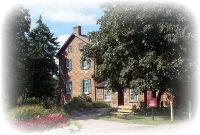
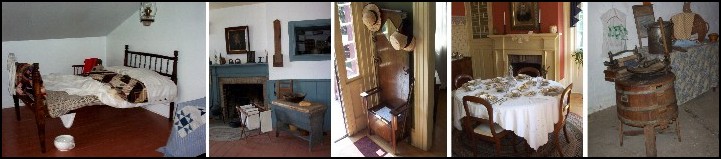
Historic Bovaird House is an exceptional example of a mid-19th century Ontario farmhouse, built in the “Georgian” style. The hallmark of Georgian architecture is symmetry and proportion; these characteristics are evident on both the exterior and interior of the home, where windows, fireplaces, and rooms are evenly matched to create a visual balance pleasing to the eye.
Volunteers at Bovaird House have endeavoured to turn back the clock, and restore the property to its original appearance. The result is a farmhouse steeped in history, furnished with authentic artifacts and period craftsmanship

Indoors
 Historic Bovaird House was built with double brick construction made from locally quarried red clay. It has two stories, a cellar, and second floor labourer’s quarters, as was the custom of the day for a prosperous farm. The house contains five fireplaces, original plank flooring, and windows made with hand-blown glass panes imported from England at the time of construction.
Many years ago, the original driveway for Bovaird House was accessed from Kennedy Road. Although the main door and formal front entrance face west toward Kennedy Road, today, visitors and volunteers may enter the home via the “side entrance” nearest to the parking lot.
Located on the main floor are a substantial farm kitchen (with Dutch oven and tin pantry), a carriage room, the parlour and dining room (with matching fireplaces and distinctive chimney cupboards) and the front entry way.
Two small additional rooms on the main floor (once bedrooms) were partially sacrificed when modern conveniences such as indoor pluming and electricity were added. Part of one room now functions as a washroom, and the other was converted into a “modern” kitchen in the 1940s.
The original carriage house, near the side entrance, has evolved into the Carriage House Gift Shoppe, featuring many unique, handcrafted and vintage items for sale.
The second storey of Historic Bovaird House consists of four bedrooms, furnished in styles authentic to the home’s renaissance. One room has been converted into a display area, featuring maps and surveys of historic Brampton, as well as antique dolls and children’s toys.
On special and seasonal occasions, the large farm kitchen, parlour, and dining room are transformed into Mossie’s Tea Room (named after the home’s last owner and generous benefactress.) Historic Bovaird House is host to a number of exclusive events throughout the year. Click here for more details:or here for more information on Mossie’s Tea Room.
Out of Doors
 Many items of interest can also be found outdoors, on the Bovaird House grounds.
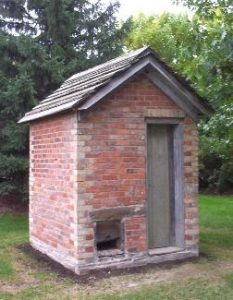
Often mistaken for an outhouse, one of our newest acquisitions is a rare, 1850s milk house. This structure was painstakingly dissembled and moved from a heritage farm on the Gore Road. The milk house serves as an excellent example of pioneer methods of refrigeration: water from a stream or well could be diverted into troughs, and made to pass directly through the milk house via two small portals in its walls. Milk cans were placed in these troughs, to keep cool and fresh even in the warmest temperatures.
Our orchards and herb garden have been carefully nurtured to best represent plants and fruits befitting a 19th century farm. Several trees on the property were planted by the Bovaird family and heritage rose gardens feature many original species, some dating all the way back to 1500.A rustic gazebo also graces the property, and is available for weddings, photography, and outdoor functions. Contact us.
Haunted by the Past
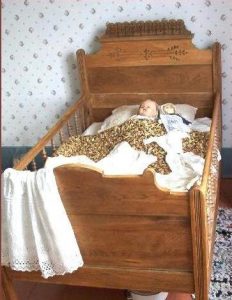 No old house is complete without a ghost…
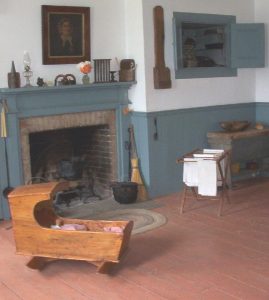
Upstairs in Bovaird House, there is a tiny nursery connected to the master bedroom. In the nursery is a beautiful and rare antique baby crib, which was generously donated to the House.
Thereby hangs a tale…
The tiny and costly wooden bed was initially purchased a number of years ago by a soon-to-be grandmother for her daughter’s first child. After the baby was born, the mother sometimes heard gentle noises coming from the child’s room . On a few occasions, she witnessed a smoky, spectral light in the shape of a woman beside the crib, overlooking the sleeping child.
The grandmother had little faith in these stories. Until…
One evening when babysitting her grandchild, she heard strange sounds coming from the bedroom. Upon entering the room, she saw for herself the same wispy image of a lady at the foot of the little bed. Although she did not fear the spirit or sense any danger, the grandmother immediately removed the baby from the bed.
The crib was then donated to Historic Bovaird House as an attractive piece of children’s period furniture, with the understanding that “no babe or child ever sleep thereon,” and it would be used for display purposes only.
Parapsychologists, ghost hunters, and persons with ESP have visited Bovaird House on numerous occasions. Almost all have been drawn to this curious piece.
The spirit-woman is not described as a menacing or disturbing presence. Many feel that perhaps a young child passed away in this crib many years ago, and that its mother never abandoned her sad vigil, even in death.
Additional Resources
Free tours of Historic Bovaird House are conducted during operating hours: Wednesdays, Saturdays, and Sundays, from 12:00 – 4:00 pm. Our knowledgeable volunteers can provide guided tours of the entire premises, answering your questions, and interpreting the many features throughout.
Members of the volunteer committee at Historic Bovaird House have recently published an informative, full-color booklet about the House. This booklet contains all information known about Bovaird House – past and present – including: its owners, history, and many furnishings and artifacts found therein. Copies are available for $15 in the Carriage House Gift Shoppe, with all proceeds going toward Historic Bovaird House.
For volunteering information, please click here: Volunteer.